Tooth-colored composite fillings in Grand Rapids, MI that repair cavities and small chips, bonded to match your natural enamel and restore the tooth's strength.
Greenland Advanced Oral Care
Fillings in Grand Rapids
A filling repairs a tooth damaged by decay before the problem reaches the nerve. Modern composite fillings are bonded to the tooth and matched to your enamel shade, so a repaired tooth looks like it was never touched. Caught early, this is a straightforward, single-visit fix.
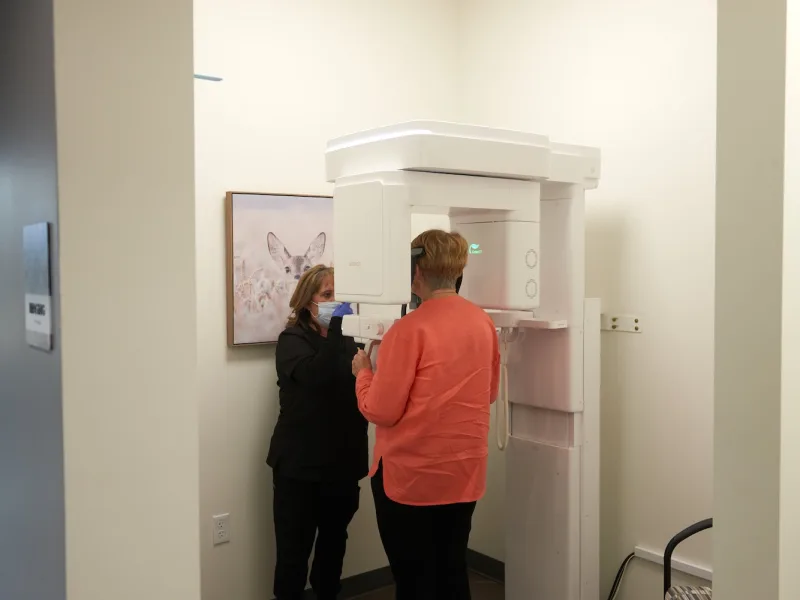
We identify decay visually and with X-rays that show between teeth, where most cavities start. Very early lesions may be monitored and remineralized rather than drilled.
Step 2
Conservative removal
Only the decayed structure is removed. Preserving healthy tooth matters. Every millimeter kept is strength the tooth still has years from now.
Step 3
Bonded, shade-matched restoration
Composite resin is placed in layers, bonded to the tooth, and cured. We shape it to your bite and polish it so it feels and looks like the original surface.
Why patients choose it
Benefits of fillings
Stops decay before it reaches the nerve and requires a root canal
Tooth-colored composite blends invisibly with natural enamel
Bonds to the tooth, supporting the remaining structure
Usually completed in a single appointment
Conserves more healthy tooth than older filling techniques
Also repairs small chips and worn edges
The basics
About fillings
Tooth decay is caused by bacteria that convert sugars into acid, which dissolves minerals out of enamel. In the earliest stage this demineralization is reversible with fluoride and better hygiene. Once the acid breaks through into the softer dentin underneath, the cavity progresses faster and cannot heal, the damaged structure has to be removed and replaced.
The timing matters a lot. A cavity confined to enamel and dentin is a filling. Left long enough to reach the pulp, the same tooth needs root canal treatment and a [crown](/services/crowns/): a substantially larger, more expensive appointment. Since early decay is painless, the only reliable way to catch it at the filling stage is a routine exam with X-rays.
New Patient Special
FREE Electric Toothbrush
Complete your first appointment and get a FREE electric toothbrush. Your visit includes a dentist consultation, comprehensive exam, X-rays if needed, a detailed oral scan, and a cleaning if applicable.
New patients only. One per patient. Mention this offer when booking.
When a filling is the right repair
Fillings handle:
Cavities that have progressed past enamel but not reached the nerve
Small chips and fractured edges on front or back teeth
Worn notches at the gum line from aggressive brushing or clenching
Replacing failed fillings where decay has developed underneath an old restoration
When damage is more extensive, a cracked cusp, a tooth after root canal treatment, or a filling that would be larger than the remaining tooth, a crown is the better answer. We will tell you which situation you are in and why.
The case for catching it early
Decay follows a predictable progression, and each stage costs more than the last:
Early demineralization: a white spot on enamel. Reversible with fluoride and hygiene. No drilling.
Enamel cavity: a small filling.
Dentin cavity, a larger filling, and often sensitivity begins.
Pulp involvement. Root canal treatment plus a crown. This is the stage where a tooth starts to hurt.
Non-restorable. Extraction, then an implant or bridge to replace it.
The gap between stage 2 and stage 4 is often a year or two of no symptoms whatsoever. That is the entire argument for routine cleanings and exams.
Composite fillings
We place tooth-colored composite resin. It is bonded directly to the tooth, which means less healthy structure has to be removed to hold it in place, and the bond itself adds support to the remaining walls.
Shade is matched to your surrounding enamel. On front teeth, where a repair is visible, this is effectively cosmetic dentistry, a well-placed composite on a chipped front tooth should be invisible.
Still have questions? Contact us: we're happy to help.
Does getting a filling hurt?+
The area is numbed with local anesthesia, so you should not feel pain during the procedure. Mild sensitivity to cold or pressure for a few days afterward is common, particularly on deeper fillings, and it settles on its own.
How long do fillings last?+
Composite fillings commonly last five to fifteen years depending on size, location, your bite, and hygiene. Fillings on chewing surfaces of back teeth take the most force and tend to wear soonest.
Are amalgam or composite fillings better?+
We place tooth-colored composite. It bonds to the tooth, requires less removal of healthy structure, and is not visible. Amalgam remains durable but is grey and needs a more retentive preparation.
Should I replace my old silver fillings?+
Not simply because they are silver. If an amalgam filling is intact and sealed, replacing it means removing more healthy tooth. We recommend replacement when there is decay underneath, a crack, or a failing margin.
How do I know if I have a cavity?+
Often you do not. Early decay is painless. Sensitivity to sweet, hot, or cold, visible dark spots, or food catching in a particular spot can be signs. X-rays at routine visits are what catch most cavities in time.
What if the cavity is too big for a filling?+
If too little healthy tooth remains, a filling will not hold and the tooth is at risk of fracturing. In that case a crown, which wraps and supports the whole tooth, is the more predictable restoration.
Can I eat right after a filling?+
Composite fillings are fully hardened before you leave, so you can eat once the numbness wears off. Waiting avoids biting your cheek or tongue while the anesthetic is still working.
How do I avoid needing fillings?+
Brush twice daily with fluoride toothpaste, clean between your teeth daily, limit how often you snack on sugars and sip sweet drinks, and keep regular cleanings. Frequency of sugar exposure matters more than total amount.
“Life Changing Transformation.
My teeth were a wreck. I had missing, broken, and discolored teeth. I had to watch what I ate because food would always get stuck in my teeth. I rarely ever smiled, and never when my picture was taken.
Best investment of my life, so glad that I found Dr. Greenland, can’t say enough about how amazing he is and the master craftsmanship Dentistry he does!
Dr. Greenland’s staff and facility is also amazing!
Dr. Greenland and Dentistry Team, I want you to know that I am very appreciative of the work, time, effort and professionalism you put into my Dental reconstruction. Thank you!
Eric”
ESE. ShieldsVerified review · Google”
“Best people ever thoughtful considerate couldn't be better”
DVDebbie VromaVerified review · Google”
“I have been treated with nothing but compassion with all the issues I have had, they are redoing implants both upper and lower that someone else did that have been giving me problems for five years. I am more than halfway through the process and can really feel the improvements, I am very grateful that I was referred to Greenland Advanced Oral Care. Everyone is just amazing they really care about you, I would highly recommend them.”