Oral surgery in Grand Rapids, MI. Extractions, bone grafting, and implant site preparation performed with a clear plan for what replaces the tooth afterward.
Greenland Advanced Oral Care
Oral Surgery in Grand Rapids
Surgical care here is planned around what comes next. An extraction is rarely the end of a problem. It creates a gap that has to be managed, and bone that will start to disappear unless the site is preserved. Because the restoration is planned by the same practice, the surgery is done in a way that sets up the replacement properly.
Before removing a tooth we decide what will replace it (implant, bridge, denture, or nothing) because that decision changes how the extraction should be done.
Step 2
Conservative surgical technique
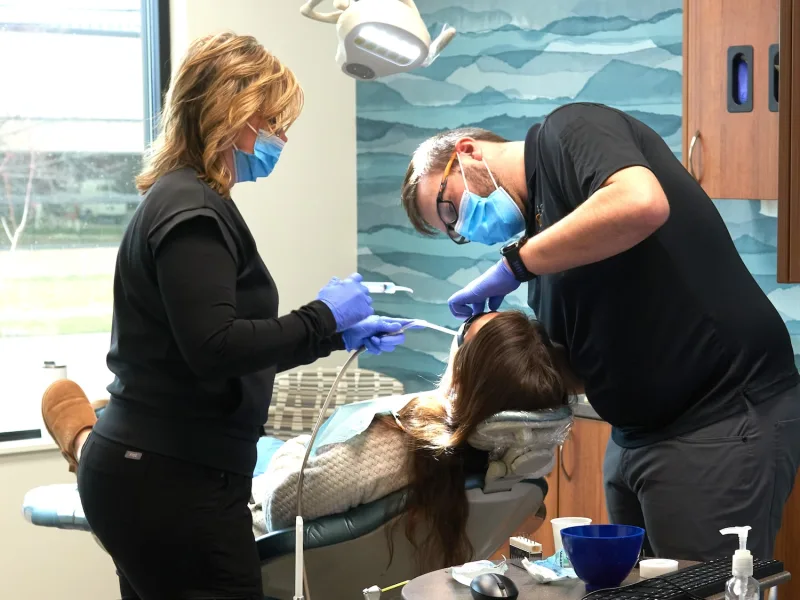
Teeth are removed with attention to preserving the surrounding bone, and grafting material is placed at the same visit when it will protect the site for a future restoration.
Step 3
Healing and restoration
We manage healing with clear aftercare and follow-up, then restore the site on the timeline the bone actually needs rather than a fixed schedule.
Why patients choose it
Benefits of oral surgery
Extraction technique that preserves bone for future restoration
Socket grafting at the same visit, avoiding a second surgery
Surgery and restoration planned by the same practice
Local anesthesia with sedation options for anxious patients
Clear aftercare instructions and follow-up
Coordination with your physician for medically complex cases
The basics
About oral surgery
When a tooth is removed, the bone that held it has no further job and begins to resorb. Most of the width loss happens in the first six to twelve months. If nothing is done, a site that could easily have held an implant may no longer have enough bone, and grafting becomes necessary later, a second surgery that could have been avoided.
This is why extraction technique and timing matter. Removing a tooth atraumatically, keeping the bony walls of the socket intact, and often placing a graft at the same appointment preserves the ridge for what comes next. It is the same procedure from the patient's side and a completely different outcome twelve months later.
New Patient Special
FREE Electric Toothbrush
Complete your first appointment and get a FREE electric toothbrush. Your visit includes a dentist consultation, comprehensive exam, X-rays if needed, a detailed oral scan, and a cleaning if applicable.
New patients only. One per patient. Mention this offer when booking.
Extractions done with the next step in mind
Not every tooth can be saved. Teeth are removed when decay has destroyed too much structure, when a fracture extends below the bone, when gum disease has taken the supporting bone, or when a tooth is causing infection that will not resolve.
What varies between practices is what happens at that appointment. Removing a tooth quickly and sending the patient home leaves a socket that collapses inward over the following months. Removing it carefully and placing a graft preserves the ridge, which is what makes a straightforward dental implant possible later instead of a bone-grafting procedure first.
Since we plan the restoration as well, that decision gets made before the tooth comes out.
Bone grafting and site preparation
Grafting rebuilds or preserves the bone that supports teeth and implants:
Socket preservation. Graft material placed immediately after extraction to hold the ridge shape
Ridge augmentation. Rebuilding width or height where bone has already resorbed
Sinus lift. Adding bone height in the upper back jaw, where the sinus limits implant length
Each adds healing time before an implant can be placed. Preserving a socket at the time of extraction usually avoids the need for the larger procedures entirely.
Oral cancer screening
Every examination here includes screening the soft tissues (tongue, floor of mouth, palate, cheeks, and throat) for anything abnormal. Oral cancer is highly treatable when caught early and much less so when it is not, and it is typically painless at the stage where it is most treatable.
Dr. Greenland completed a fellowship at MD Anderson Cancer Center in oral oncology and maxillofacial prosthetics. If something needs biopsy or referral, we will say so directly and help coordinate it.
Medically complex patients
Patients on blood thinners, bisphosphonates, or immunosuppressants, and those in or recovering from cancer treatment, need surgical care planned in coordination with their physicians. That coordination is routine here rather than exceptional, and it is part of why the practice was built to bridge dental and medical care.
Facing an extraction, or been told you need one? Book a consultation, including for a second opinion on whether the tooth can be saved.
Still have questions? Contact us: we're happy to help.
What oral surgery procedures do you perform?+
Simple and surgical extractions, socket preservation and bone grafting, implant site development, and the surgical placement of dental implants. Cases requiring hospital-based surgery or general anesthesia are referred to an oral and maxillofacial surgeon.
Does an extraction hurt?+
The procedure itself is done under local anesthesia and should not be painful. Soreness for a few days afterward is normal and usually managed with over-the-counter medication. Sedation is available if you are anxious.
How long does recovery take?+
Most patients feel substantially better within three to five days, with soft tissue healing over about two weeks. Bone healing underneath continues for several months, which is why implants are placed on a longer timeline.
Why would I need a bone graft?+
Either to preserve a socket at the time of extraction so bone does not collapse, or to rebuild bone that has already been lost so an implant has something to anchor into. Preserving is easier and cheaper than rebuilding.
Can the tooth be saved instead of extracted?+
Often, yes, and we would rather save it. Root canal treatment plus a crown saves many teeth that look hopeless. We recommend extraction when the remaining structure or the supporting bone will not support a lasting restoration.
What should I do after an extraction?+
Bite on gauze to control bleeding, apply cold for the first day, avoid rinsing vigorously, do not use a straw, and do not smoke: suction and smoking both dislodge the clot and cause dry socket. Full written instructions come with you.
What is dry socket?+
Loss of the blood clot from the socket, exposing bone. It is painful and typically begins two to four days after an extraction. Call us if pain worsens rather than improves. It is easily treated once we see you.
Do you screen for oral cancer during surgical care?+
Yes. Every examination includes screening the soft tissues of the mouth, tongue, and throat, and Dr. Greenland completed a fellowship in oral oncology at MD Anderson Cancer Center.
“Life Changing Transformation.
My teeth were a wreck. I had missing, broken, and discolored teeth. I had to watch what I ate because food would always get stuck in my teeth. I rarely ever smiled, and never when my picture was taken.
Best investment of my life, so glad that I found Dr. Greenland, can’t say enough about how amazing he is and the master craftsmanship Dentistry he does!
Dr. Greenland’s staff and facility is also amazing!
Dr. Greenland and Dentistry Team, I want you to know that I am very appreciative of the work, time, effort and professionalism you put into my Dental reconstruction. Thank you!
Eric”
ESE. ShieldsVerified review · Google”
“Best people ever thoughtful considerate couldn't be better”
DVDebbie VromaVerified review · Google”
“I have been treated with nothing but compassion with all the issues I have had, they are redoing implants both upper and lower that someone else did that have been giving me problems for five years. I am more than halfway through the process and can really feel the improvements, I am very grateful that I was referred to Greenland Advanced Oral Care. Everyone is just amazing they really care about you, I would highly recommend them.”