
Full Mouth Reconstruction in Grand Rapids
Full mouth reconstruction in Grand Rapids, MI. A Mayo Clinic-trained prosthodontist rebuilds worn, damaged, or missing teeth as one coordinated, staged treatment plan.
Greenland Advanced Oral Care
Full Mouth Reconstruction in Grand Rapids
Full mouth reconstruction rebuilds an entire bite. Every tooth planned as part of one design rather than repaired one at a time. It is the treatment for mouths where years of wear, decay, or tooth loss have changed how the jaws meet. This is the most demanding work in restorative dentistry, and it is what Dr. Greenland trained three years at Mayo Clinic to do.
How it works
What to expect with full mouth reconstruction
- Step 1
Complete diagnostic workup
Records of the jaw joints, muscles, existing teeth, bone levels, and current bite, plus digital scans, photographs, and mounted models. Nothing is prepared until the plan is finished.
- Step 2
Provisional phase
We build the proposed new bite in temporary restorations and you wear them, testing comfort, speech, chewing, and appearance in real life. Adjustments happen here, while they are still easy.
- Step 3
Definitive restoration
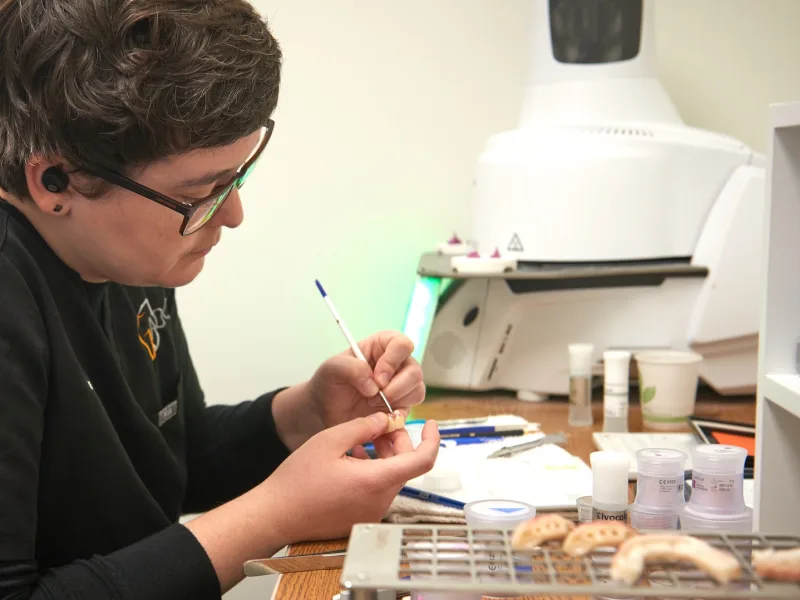
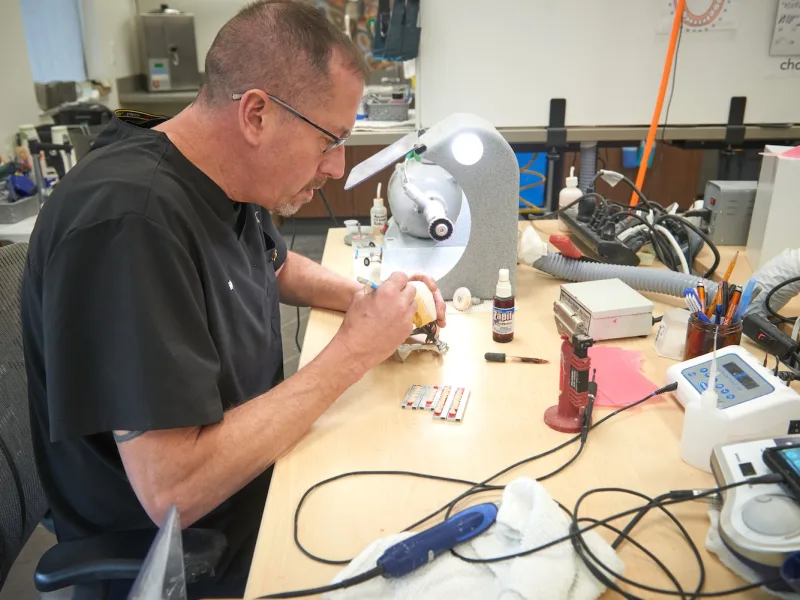
Once the provisional design is proven, our laboratory fabricates the final restorations to match it exactly, and they are placed and refined in stages.
Why patients choose it
Benefits of full mouth reconstruction
Restores chewing function across the whole mouth
Re-establishes proper bite height lost to wear
Often relieves jaw and muscle discomfort from a collapsed bite
Every restoration designed as part of one coordinated plan
The new bite is tested in provisionals before anything is permanent
Fabricated in our on-site laboratory under one design
The basics
About full mouth reconstruction
Your teeth establish the vertical dimension of your bite: the distance between your upper and lower jaw when your teeth meet. Everything else adapts to it: the jaw joints, the chewing muscles, the position of your lips and lower face. When teeth wear down or are lost over many years, that dimension collapses gradually, and the whole system compensates.
Rebuilding it is not a matter of putting crowns on worn teeth. The new bite height has to be determined, tested, and confirmed comfortable before anything permanent is made: because changing it too much or too fast produces joint pain and muscle spasm, and restorations built at the wrong height fracture. That testing phase, usually with removable provisional restorations worn for weeks, is the part that separates reconstruction from a series of crowns.
New Patient Special
FREE Electric Toothbrush
Complete your first appointment and get a FREE electric toothbrush. Your visit includes a dentist consultation, comprehensive exam, X-rays if needed, a detailed oral scan, and a cleaning if applicable.
New patients only. One per patient. Mention this offer when booking.
When reconstruction is the right approach
Signs that a mouth needs rebuilding as a whole rather than repairing piece by piece:
- Teeth visibly shortened and flattened from years of grinding
- Multiple failing crowns, bridges, or large fillings
- Several missing teeth that have let the remaining ones drift
- Chronic jaw or muscle discomfort alongside significant tooth wear
- A collapsed lower face appearance, with the chin closer to the nose than it once was
- Repeated fractures: one tooth after another breaking
The provisional phase is the treatment
The part patients do not expect is how much time goes into temporary restorations.
Once we determine a proposed new bite height, we build it in provisionals and you live with it. You eat with it, speak with it, and see how your jaw muscles respond over weeks. If something is off (a sore joint, an “s” sound that whistles, a front tooth that looks too long) we change the provisional, which is quick and inexpensive.
Only when the design is confirmed does our laboratory copy it into the final restorations. Doing it in the other order means discovering problems in porcelain, where fixing them means starting over.
What the reconstruction is built from
Reconstruction combines the full restorative toolkit into one plan:
- Crowns on teeth that are sound enough to keep
- Bridges spanning shorter gaps
- Dental implants where teeth are missing and bone allows
- Dentures or implant-supported overdentures for larger spans
- Extractions and grafting where teeth are not restorable
Why a prosthodontist
This is the defining work of the specialty. Dr. Greenland completed a three-year Advanced Prosthodontics Residency at Mayo Clinic focused on fixed, removable, and implant prosthodontics in a multidisciplinary hospital setting, followed by a maxillofacial prosthetics fellowship at MD Anderson Cancer Center.
Combined with an in-house laboratory where dozens of units are designed as one unified bite, that is the reason patients travel to this practice for reconstruction, and why a meaningful number of our cases are rebuilding work that did not go well somewhere else.
If you have been told your case is complicated, book a consultation. We will tell you what is realistic before you commit to anything.
What it helps
Conditions we treat with full mouth reconstruction
Who needs full mouth reconstruction?+
Patients with extensive wear from years of grinding, multiple failing restorations, several missing teeth that have changed the bite, or a combination. It is also common after significant trauma or as part of dental rehabilitation following cancer treatment.
How long does it take?+
Usually six months to a year or more, depending on whether extractions, grafting, and implant healing are involved. The provisional phase alone often runs several weeks to months, and rushing it is the main cause of failure.
Is it painful?+
Individual appointments are done with local anesthesia and are comfortable, with sedation available. Adjusting to a new bite involves some muscle adaptation over the first weeks, which is expected and monitored.
What does it cost?+
Full mouth reconstruction is a significant investment and the range is wide, because cases differ enormously. We provide a detailed written plan with costs by phase before you commit, and financing options are available.
Will it look natural?+
Yes. That is a core objective, and you approve the appearance in the provisional phase before the final restorations are made. Our technicians match shade and texture with you in the building.
Can it be done in stages?+
Almost always, and most patients do phase it. We plan the complete design first so each phase fits the final result, then complete it at a pace that works financially.
What if I have been told my teeth cannot be saved?+
Get a second opinion from a prosthodontist. Some teeth genuinely cannot be saved, but reconstruction that combines implants with remaining sound teeth is often possible when a general practice has said no.
Will insurance help?+
Portions are often covered where treatment is restorative and medically necessary, though annual maximums limit how much applies to a case this size. We file claims as a courtesy and will map out how benefits and financing fit the phasing.
Explore more
Related services
Patient reviews
What our Grand Rapids patients say
“Life Changing Transformation. My teeth were a wreck. I had missing, broken, and discolored teeth. I had to watch what I ate because food would always get stuck in my teeth. I rarely ever smiled, and never when my picture was taken. Best investment of my life, so glad that I found Dr. Greenland, can’t say enough about how amazing he is and the master craftsmanship Dentistry he does! Dr. Greenland’s staff and facility is also amazing! Dr. Greenland and Dentistry Team, I want you to know that I am very appreciative of the work, time, effort and professionalism you put into my Dental reconstruction. Thank you! Eric”
“Best people ever thoughtful considerate couldn't be better”
“I have been treated with nothing but compassion with all the issues I have had, they are redoing implants both upper and lower that someone else did that have been giving me problems for five years. I am more than halfway through the process and can really feel the improvements, I am very grateful that I was referred to Greenland Advanced Oral Care. Everyone is just amazing they really care about you, I would highly recommend them.”