
Teeth Alignment Treatment in Grand Rapids
Crooked and crowded teeth treatment in Grand Rapids, MI with Invisalign clear aligners and cosmetic options from a certified provider, Dr. Eryn Huber.
Dental treatment for teeth alignment
Get to the root of your teeth alignment
Also known as: Crooked teeth, Crowded teeth, Malocclusion, Gapped teeth
Crooked and crowded teeth are not only an appearance issue. Overlapping surfaces trap plaque where floss cannot clean properly, and an uneven bite concentrates chewing force on a few teeth, wearing and cracking them. Correcting alignment addresses those problems at the source.
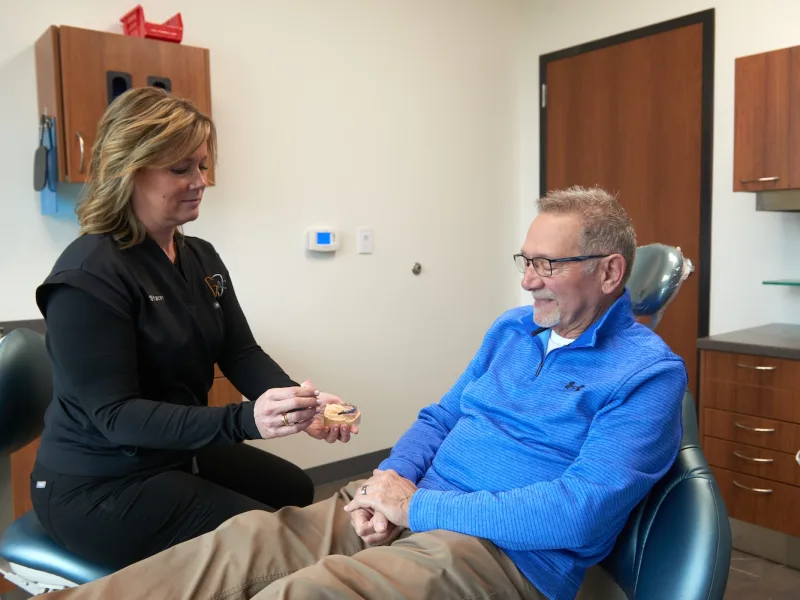
Symptoms of teeth alignment
- ✓Teeth that overlap, twist, or sit out of the arch
- ✓Noticeable gaps between teeth
- ✓Upper and lower teeth that do not meet evenly when you bite
- ✓Food consistently packing in the same overlapping spot
- ✓Uneven wear, with some teeth visibly shorter than others
- ✓Teeth that have shifted since braces years ago
Common causes
- Jaw size relative to tooth size, largely inherited
- Early or late loss of baby teeth affecting eruption
- Missing teeth allowing neighboring teeth to drift into the space
- Not wearing a retainer after previous orthodontic treatment
- Prolonged thumb sucking or tongue thrust in childhood
- Gum disease loosening teeth and allowing them to migrate
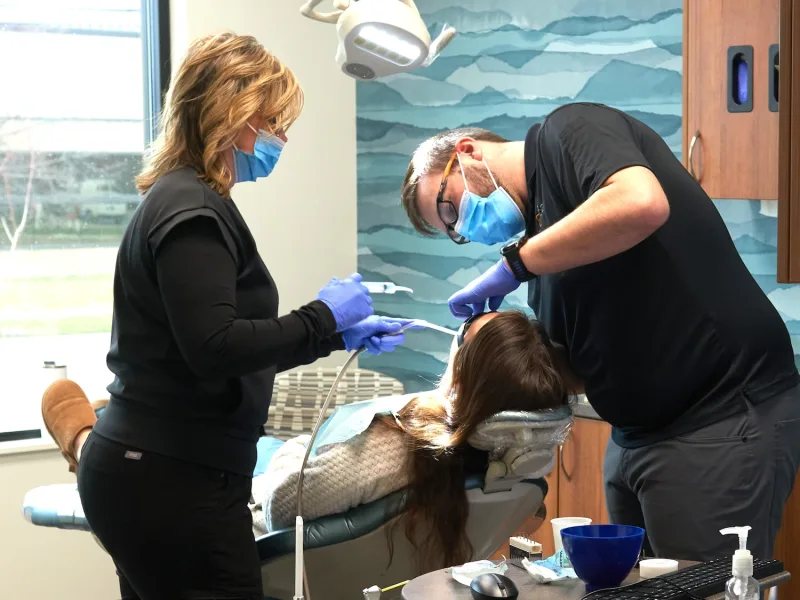
Our approach
How we treat teeth alignment in Grand Rapids
- Step 1
Diagnose what is actually wrong
We assess crowding, spacing, rotation, and how the arches relate, and evaluate whether the concern is alignment, tooth shape, or shade. They are often confused, and the answer changes the treatment.
- Step 2
Digital planning
A scan builds a plan showing the movement sequence and final position before treatment starts, so you can see the projected result and know the realistic timeline.
- Step 3
Correct, then retain
Clear aligners move the teeth over months, with progress checked along the way. Retainers hold the result afterward: without them, teeth drift back.
The basics
Understanding teeth alignment
Alignment problems usually come down to a mismatch between the size of the teeth and the size of the jaw that has to hold them. Too little room produces crowding and rotation; too much produces spacing. Both are largely inherited, though early tooth loss, habits in childhood, and missing teeth in adulthood all contribute.
Alignment also changes throughout life. Teeth drift forward slowly with age, and they move markedly when a neighboring tooth is lost or when a retainer stops being worn. That is why people who had braces as teenagers often see crowding return in their thirties: the teeth were moved but not held.
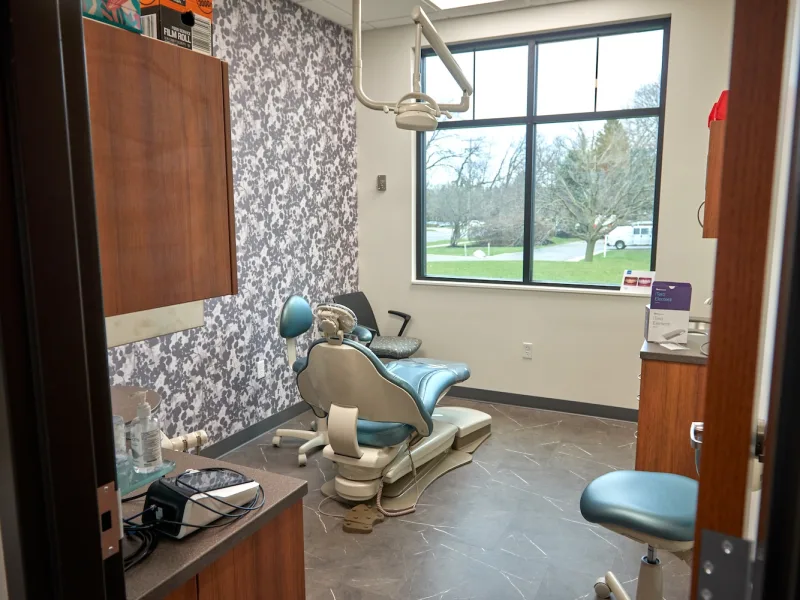
New Patient Special
FREE Electric Toothbrush
Complete your first appointment and get a FREE electric toothbrush. Your visit includes a dentist consultation, comprehensive exam, X-rays if needed, a detailed oral scan, and a cleaning if applicable.
New patients only. One per patient. Mention this offer when booking.
What misalignment does over time
Traps plaque. Where teeth overlap, floss cannot get a clean pass along the surface. Those specific spots develop cavities and gum disease faster than the rest of the mouth.
Concentrates force. When teeth do not meet evenly, a few take a disproportionate share of every bite. Over years those teeth wear down, and they are the ones that chip and crack.
Drives grinding. Interfering contacts can contribute to clenching and grinding, which accelerates the wear further.
Affects the joint. Significant bite discrepancies place uneven load on the jaw joints and muscles, which for some patients produces ongoing discomfort.
Treatment options
Invisalign clear aligners, the most common approach for adults. Removable, nearly invisible, and Dr. Huber is a certified provider. Works well for crowding, spacing, relapse, and mild to moderate bite issues.
Traditional orthodontics. Still more predictable for severe skeletal discrepancies or complex movements. We will refer when that is the better answer rather than stretching aligners past what they do well.
Cosmetic bonding or veneers. Appropriate when the teeth also have shape or shade problems, or when a patient specifically does not want a months-long treatment. Understand that this covers misalignment rather than correcting it.
Prosthodontic reconstruction, when alignment problems come with worn or missing teeth, the bite itself needs rebuilding rather than just repositioning.
Alignment before restoration
There is a sequencing point worth understanding. If you are missing a tooth and the neighboring teeth have drifted, the gap is no longer the right width for a replacement. Placing an implant into that space produces a tooth that is too narrow or too wide.
Aligning first, then restoring, gives a much better result. It is the kind of sequencing decision that benefits from prosthodontic planning before treatment starts.
Retention is the part people skip
Teeth move for your whole life. Whatever gets them straight, retainers are what keep them there. Worn as directed, indefinitely. Most adults seeking treatment for crowding had braces as teenagers and stopped wearing their retainer.
Considering straightening your teeth? Book a consultation with Dr. Huber to see what your case would involve.
Why choose our practice
Straightening teeth vs. covering them
| Comparison factor | Aligning the Teeth | Veneering Over Them |
|---|---|---|
| Tooth structure removed | ✓None. Your own teeth are moved | ✕Enamel permanently reduced |
| Reversibility | ✓Non-destructive | ✕Irreversible; teeth always need coverage |
| Cleaning and hygiene | ✓Improved. Teeth are easier to floss | ✕Unchanged crowding beneath restorations |
| Timeline | ✓Roughly six to eighteen months | ✕A few weeks |
| Long-term maintenance | ✓Retainer wear | ✕Replacing restorations every 10–15 years |
Treatment options
Treatments we use for teeth alignment
Prosthodontics
Advanced prosthodontic care in Grand Rapids, MI. Dr. Greenland rebuilds missing, worn, and damaged teeth with implants, crowns, bridges, and dentures made in our own lab.
Learn more →Cosmetic Dentistry
Cosmetic dentistry in Grand Rapids, MI. Veneers, bonding, whitening, and smile design planned by a prosthodontist and crafted in our on-site dental laboratory.
Learn more →Invisalign
Invisalign clear aligners in Grand Rapids, MI with certified provider Dr. Eryn Huber. Straighten crowded, gapped, or shifted teeth without metal braces.
Learn more →Smile Enhancements
Smile enhancement and smile design in Grand Rapids, MI. Veneers, bonding, whitening, and alignment combined into one plan by a prosthodontist with an in-house lab.
Learn more →Related conditions
Other conditions we treat in Grand Rapids
Patient reviews
What our Grand Rapids patients say
“Life Changing Transformation. My teeth were a wreck. I had missing, broken, and discolored teeth. I had to watch what I ate because food would always get stuck in my teeth. I rarely ever smiled, and never when my picture was taken. Best investment of my life, so glad that I found Dr. Greenland, can’t say enough about how amazing he is and the master craftsmanship Dentistry he does! Dr. Greenland’s staff and facility is also amazing! Dr. Greenland and Dentistry Team, I want you to know that I am very appreciative of the work, time, effort and professionalism you put into my Dental reconstruction. Thank you! Eric”
“Best people ever thoughtful considerate couldn't be better”
“I have been treated with nothing but compassion with all the issues I have had, they are redoing implants both upper and lower that someone else did that have been giving me problems for five years. I am more than halfway through the process and can really feel the improvements, I am very grateful that I was referred to Greenland Advanced Oral Care. Everyone is just amazing they really care about you, I would highly recommend them.”
Are crooked teeth actually a health problem?+
They can be. Overlapping teeth trap plaque in spots that floss cannot reach cleanly, raising decay and gum disease risk in those specific areas, and an uneven bite concentrates force on a few teeth, causing faster wear and fractures.
Am I too old for orthodontic treatment?+
No. Teeth move at any age because the biological process is the same. Adults make up a large share of aligner patients, and treatment often takes similar time to a teenager's.
How long does Invisalign take?+
Most cases run roughly six to eighteen months. Minor crowding or relapse after old braces finishes faster. Wearing the aligners 20 to 22 hours a day is the single biggest factor in staying on schedule.
Should I get veneers instead of straightening my teeth?+
If your teeth are healthy and simply misaligned, aligners are more conservative: they move your own teeth and remove no enamel. Veneers make more sense when teeth also have shape, color, or structural problems that alignment alone would not fix.
Why did my teeth shift after braces?+
Almost always because retainer wear stopped. Teeth have a strong tendency to return toward their original positions, and retention is a long-term commitment rather than a few months after treatment.
Can my teeth be straightened if I am missing a tooth?+
Often that is exactly the right sequence. Align the teeth first so the space is the correct size, then place the implant or bridge. Planning both together avoids ending up with a gap that is the wrong width.
Will my insurance cover it?+
Plans with orthodontic benefits often cover a portion, typically with a lifetime maximum. Dr. Huber is in-network with Delta Dental of Michigan. We check benefits and go over financing before you start.
Does straightening help with grinding?+
Sometimes. If uneven contacts contribute to clenching, correcting them can help. But aligners are not a night guard, and patients who grind heavily generally still need a separate protective appliance.