Prosthodontics in Grand Rapids
Advanced prosthodontic care in Grand Rapids, MI. Dr. Greenland rebuilds missing, worn, and damaged teeth with implants, crowns, bridges, and dentures made in our own lab.
Greenland Advanced Oral Care
Prosthodontics in Grand Rapids
Prosthodontics is the dental specialty devoted to rebuilding teeth. Replacing what is missing and restoring what is damaged. Dr. R. Graham Greenland completed a three-year Advanced Prosthodontics Residency at Mayo Clinic and a maxillofacial prosthetics fellowship at MD Anderson Cancer Center, and he treats the cases other offices refer out: failed implants, worn-down bites, and full-arch reconstruction.
How it works
What to expect with prosthodontics
- Step 1
Diagnosis before design
We record your bite, scan your teeth digitally, review imaging, and identify why previous work failed before proposing anything. Complex cases are planned end to end, not tooth by tooth.
- Step 2
A staged, written treatment plan
You get the sequence, the timeline, and the cost in writing, with the options laid out side by side so you can make an informed decision about your own mouth.
- Step 3
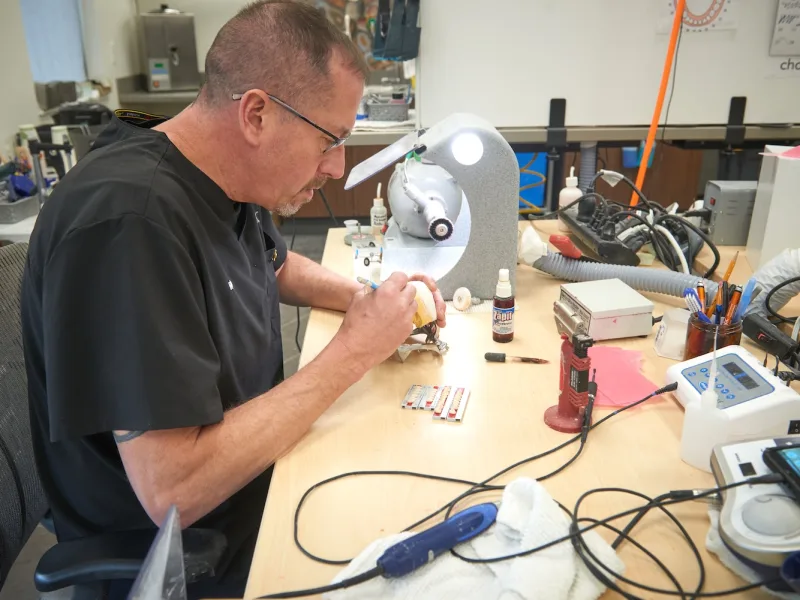
Fabricated in our own laboratory
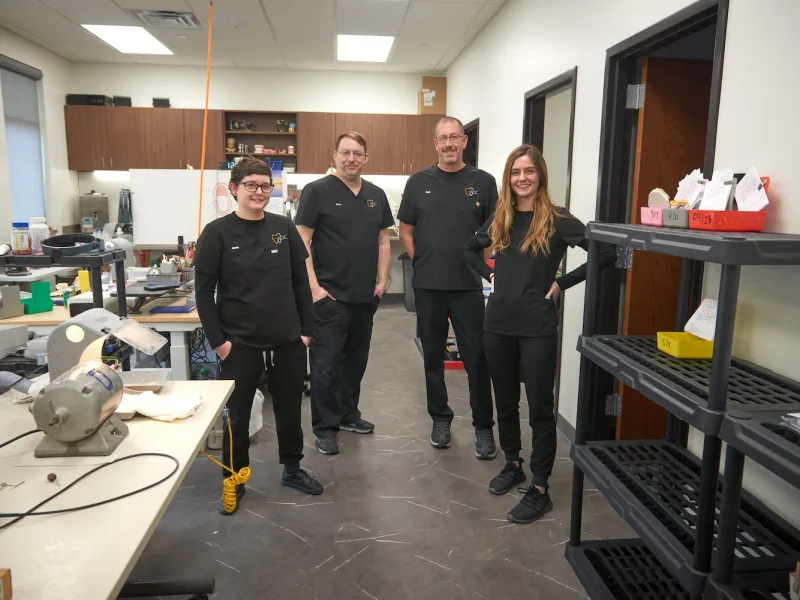
Your restorations are designed and milled in the lab inside our building. That means faster adjustments, better shade matching, and a technician who can walk down the hall.
Why patients choose it
Benefits of prosthodontics
Specialist-level training for complex and failed restorative cases
Restores chewing, speech, and comfort: not just appearance
Protects remaining teeth from further wear and drifting
Bite correction that addresses jaw discomfort at the source
In-house laboratory means fewer visits and a better final fit
Coordinated care for medically complex and post-cancer patients
The basics
About prosthodontics
A prosthodontist is one of the specialists recognized by the American Dental Association. After four years of dental school, a prosthodontist completes roughly three additional years of hospital-based residency focused entirely on restoring and replacing teeth, fixed work like crowns and bridges, removable work like dentures and partials, and implant prosthetics that combine both.
That extra training matters most when a case is complicated. If several teeth are missing, if your bite has collapsed from years of wear, if a previous restoration keeps failing, or if you need dental care coordinated with cancer treatment or another medical condition, the sequencing and the engineering behind the restoration become as important as the restoration itself. That is the work a prosthodontist is trained for.
New Patient Special
FREE Electric Toothbrush
Complete your first appointment and get a FREE electric toothbrush. Your visit includes a dentist consultation, comprehensive exam, X-rays if needed, a detailed oral scan, and a cleaning if applicable.
New patients only. One per patient. Mention this offer when booking.
What prosthodontics actually covers
Prosthodontics is the branch of dentistry concerned with the design, fabrication, and fitting of artificial replacements for teeth and the tissues around them. In practice, that means four overlapping categories of work:
- Fixed prosthodontics. crowns and bridges that are cemented permanently in place
- Removable prosthodontics. Full and partial dentures you take out to clean
- Implant prosthodontics. Restorations anchored to dental implants placed in the jawbone
- Maxillofacial prosthetics. Prostheses for patients with defects from surgery, trauma, or a congenital condition
Most patients arrive needing more than one of these. A single case might involve extracting a failing tooth, placing an implant, and restoring the teeth on either side: each step affecting the next. Planning that sequence correctly is the difference between a restoration that lasts and one that fails in three years.
Why the in-house laboratory matters
Most dental offices send impressions to an outside laboratory and wait. We designed our own dental laboratory into the practice, staffed by a Certified Dental Technician and a digital lab director.
That changes the work in concrete ways. Shade matching happens with you in the building under the same light, not from a photo. If a margin needs adjusting, the technician who made the restoration can look at it the same day instead of shipping it back and forth. And for full-mouth reconstruction, where dozens of units have to work together as one bite, the design stays under one roof from start to finish.
Conditions we commonly rebuild
Patients across Grand Rapids come to us for:
- Missing teeth: one tooth, several, or a full arch
- Chipped, cracked, or broken teeth that have gone past what a filling can hold
- Bite and alignment problems that have changed how the teeth meet
- Worn-down teeth from years of grinding
- Implants or crowns placed elsewhere that have loosened, fractured, or failed
- Dental rehabilitation after cancer treatment or oral surgery
Working with medically complex patients
Dr. Greenland completed a fellowship at MD Anderson Cancer Center in oral oncology and maxillofacial prosthetics. That background shapes how this practice handles patients whose dental care intersects with their medical care: during or after radiation, through chemotherapy, or alongside a neuromuscular condition.
Prosthodontists trained in this setting are used to working alongside ENTs, oral surgeons, plastic surgeons, radiation oncologists, and speech pathologists. If your dentist and your physician need to be talking to each other, that coordination is something we do routinely rather than as an exception.
Getting started
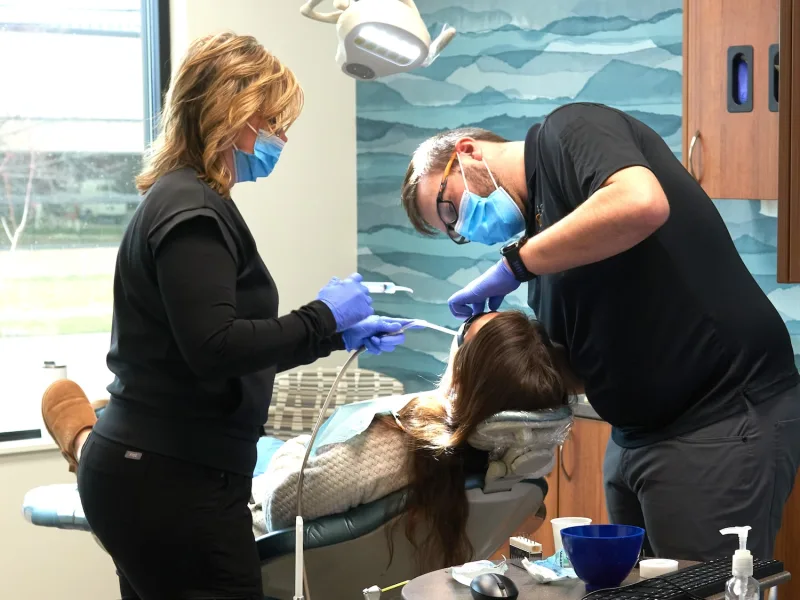
Your first visit is a conversation and an examination, not a sales appointment. We look at your teeth, gums, bite, and any existing restorations, take digital scans and any imaging we need, and then talk through what is realistic.
New patients receive our New Patient Special, and financing and membership plan details are on our payment options page. Book an appointment or call us and we will tell you honestly whether a prosthodontist is what you need.
What it helps
Conditions we treat with prosthodontics
What is a prosthodontist?+
A prosthodontist is a dental specialist recognized by the American Dental Association who has completed about three years of additional hospital-based training after dental school, focused entirely on restoring and replacing teeth. Crowns, bridges, dentures, and dental implants.
What is the difference between a general dentist and a prosthodontist?+
General dentists provide a broad range of care, including many restorations. Prosthodontists have advanced training concentrated on complex restoration and tooth replacement, which is why they are usually the ones handling full-mouth reconstruction, failed implants, and cases where the bite itself has to be rebuilt.
When should I see a prosthodontist instead of a general dentist?+
Consider a prosthodontist if you are missing several teeth, have restorations that keep failing, need full-mouth reconstruction, have significant wear from grinding, or need dental work coordinated with a medical condition. Our general dentist, Dr. Huber, handles routine care in the same office.
Do prosthodontic restorations look natural?+
Yes. Matching the color, shape, translucency, and surface texture of your surrounding teeth is a core part of the specialty. Because our laboratory is on site, our technicians can see your teeth in person rather than working from a photograph.
How long does prosthodontic treatment take?+
It depends entirely on the case. A single crown may take two visits. Implant-supported restorations involve healing time and typically run several months. Full-mouth reconstruction can take six months or more. We give you the expected timeline before you commit.
Are prosthodontic treatments permanent?+
No dental restoration lasts forever, but well-made prosthodontic work is built to last many years with good hygiene and regular checkups. We will tell you honestly what lifespan to expect from each option we present.
Is prosthodontic treatment painful?+
Most procedures are done with local anesthesia and are more comfortable than patients expect. Sedation options are available for longer or more involved appointments. Tell us if you are anxious, a number of our patients came to us specifically because they were.
Can prosthodontics help with jaw pain or bite problems?+
Often, yes. When teeth are missing or badly worn, the bite changes and the jaw joint compensates. Restoring proper tooth height and alignment can relieve that strain, which is why we evaluate your bite before designing any restoration.
Does insurance cover prosthodontic treatment?+
Coverage varies by plan and procedure, and medically necessary restorative work is often partially covered. We are a fee-for-service practice and are happy to file your claims as a courtesy. See our payment options page for financing and membership plan details.
Explore more
Related services
Patient reviews
What our Grand Rapids patients say
“Life Changing Transformation. My teeth were a wreck. I had missing, broken, and discolored teeth. I had to watch what I ate because food would always get stuck in my teeth. I rarely ever smiled, and never when my picture was taken. Best investment of my life, so glad that I found Dr. Greenland, can’t say enough about how amazing he is and the master craftsmanship Dentistry he does! Dr. Greenland’s staff and facility is also amazing! Dr. Greenland and Dentistry Team, I want you to know that I am very appreciative of the work, time, effort and professionalism you put into my Dental reconstruction. Thank you! Eric”
“Best people ever thoughtful considerate couldn't be better”
“I have been treated with nothing but compassion with all the issues I have had, they are redoing implants both upper and lower that someone else did that have been giving me problems for five years. I am more than halfway through the process and can really feel the improvements, I am very grateful that I was referred to Greenland Advanced Oral Care. Everyone is just amazing they really care about you, I would highly recommend them.”